
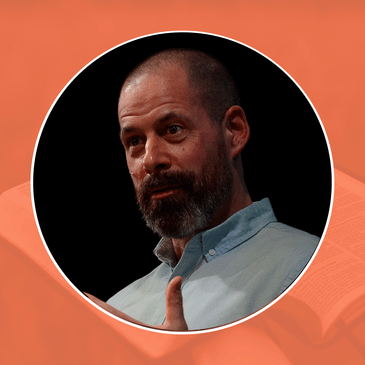
Title: Why Should We Gather Around The Book?
Speaker: Nate Holdridge
Text: 2 Timothy 3:16-17
[00:00:05] Thank you for listening to the Calvary Monterey Podcast. To learn more about our church, please visit calvary.com. And for additional resources from our lead pastor, Nate Holdridge, please visit nateholdridge.com. Teaching today is our lead pastor, Nate Holdridge.
[00:00:24] All right. Good morning, church. Great to see you guys today. Happy New Year to you. I know it's the fifth already and our year has gotten rolling, but this is our first Sunday of the new year. And so happy new year to you.
[00:00:39] And, you know, we have no idea what God is going to do this next year, what things are going to come into our lives this next year. But I'm praying that for each one of you, God continues his work of sanctification and growth and change and transformation in your life and that he meets you for every adventure that he's calling you to this next year.
[00:01:05] The good, the bad and the ugly that he, by his spirit, will be there for you in everything you're going to face this year. But I'm excited about this year. We had a great little Christmas season as a Holdridge family.
[00:01:18] My middle daughter, Violet, last night got in her little car and drove back to UC Davis where she's a freshman. And we were sad to have the Fab Five, the Holdridge Family Five, broken up once again.
[00:01:33] I hate this part of life. And so a little sadness in my heart last night, but glad to be together with you in the word today.
[00:01:42] And I want to share a scripture today from 2 Timothy. If you turn there in your Bibles, 2 Timothy chapter 3 leading into chapter 4,
[00:01:51] but really focusing on two important verses that many of you, I'm sure, know.
[00:01:59] But I want to read a larger section starting in 2 Timothy chapter 3, verse 1.
[00:02:06] This is, for those of you who are newer to scripture, the first, or excuse me, the last book of the Bible that Paul the Apostle ever wrote.
[00:02:16] He's about ready to die.
[00:02:18] And he writes this final letter to his protege, a young man named Timothy.
[00:02:25] He says to Timothy,
[00:03:00] So tell us what you really think, Paul.
[00:03:07] He says,
[00:03:44] You, however, have followed my teaching, my conduct, my aim in life, my faith, my patience, my love, my steadfastness,
[00:03:56] my persecutions and sufferings that happened to me at Antioch, at Iconium, and at Lystra,
[00:04:04] which persecutions I endured, yet from them all the Lord rescued me.
[00:04:10] Indeed, all who desire to live a godly life in Christ Jesus will be persecuted,
[00:04:17] while evil people and imposters will go from bad to worse, deceiving and being deceived.
[00:04:24] But as for you, verse 14,
[00:04:27] Continue in what you have learned and have firmly believed, knowing from whom you learned it,
[00:04:35] and how from childhood you have been acquainted with the sacred writings,
[00:04:41] which are able to make you wise for salvation through faith in Christ Jesus.
[00:04:48] All scripture is breathed out by God and profitable for teaching, for reproof, for correction, and for training in righteousness.
[00:05:00] That the man of God may be complete, equipped for every good work.
[00:05:08] Let's read the first five verses of chapter 4.
[00:05:11] I charge you in the presence of God and of Christ, who is to judge the living and the dead,
[00:05:18] and by his appearing and his kingdom, preach the word.
[00:05:22] Be ready in season and out of season.
[00:05:26] Reprove, rebuke, and exhort with complete patience and teaching.
[00:05:33] For the time is coming when people will not endure sound teaching,
[00:05:37] but having itching ears, they will accumulate for themselves teachers to suit their own passions,
[00:05:45] and will turn away from listening to the truth and wander off into myths.
[00:05:53] As for you, always be sober-minded, endure suffering, do the work of an evangelist, fulfill your ministry.
[00:06:06] Powerful section of scripture.
[00:06:07] Let's pray and ask the Lord to minister to us from it.
[00:06:10] Lord, thank you for this passage.
[00:06:12] Just the power of it, Lord.
[00:06:14] It's just even embarrassing for me to think about the things that I now am going to say about this text.
[00:06:22] Just the text itself.
[00:06:25] So strong, so holy, so enlightening.
[00:06:29] And so, Lord, we thank you for it.
[00:06:32] And we ask that you'd help us this year as we think about this book that you have given to us.
[00:06:38] We thank you, Lord.
[00:06:39] In Jesus' name, we pray together.
[00:06:42] Amen.
[00:06:43] Amen.
[00:06:43] All right, I want to start out today and really this year with just a question.
[00:06:52] Why should we gather around this book?
[00:06:57] This book that we just read, this book that is comprised of 66 individual books,
[00:07:03] 1,189 chapters as we've broken them up so that we can access them more easily and find our place more easily.
[00:07:11] Why should we, as a church, as a people, gather around this book?
[00:07:20] And by the way, that is what we are planning to do together again as a church this year.
[00:07:29] We want to gather around this book.
[00:07:34] It's not that we worship this book.
[00:07:36] We worship the God who made this book.
[00:07:39] But we want to know that God.
[00:07:41] We want to love that God.
[00:07:42] We want to love him with all our heart, mind, soul, and strength and to love our neighbor as ourselves.
[00:07:48] And so we want to go into this book once again this year to say, what does that look like?
[00:07:55] Who is this God that we're called to worship?
[00:07:59] Who is this God that has made himself known to us?
[00:08:02] And what does he say for our lives?
[00:08:05] I'm kind of answering the question, why should we gather around this book with the way that I'm asking the question right now?
[00:08:11] It's a book that is from him to us.
[00:08:15] But that's what we're going to do this next year.
[00:08:19] We're going to have 52 Sundays this year.
[00:08:22] I had to double check.
[00:08:23] Sometimes we have 53 Sundays in a year.
[00:08:26] We'll have 52 Sundays this next year.
[00:08:31] We're going to center ourselves around the book on those Sundays.
[00:08:36] We're going to start off next week with a long study through the book of Proverbs.
[00:08:42] We're going to go into the Old Testament and we're going to glean wisdom from God.
[00:08:47] Because we live in a time where knowledge is at our fingertips and we are as foolish as we've ever been.
[00:08:56] So we're going to look into the ancient wisdom of God's word and try to wrestle with how do we construct and build our lives?
[00:09:05] After we're done with the book of Proverbs, Lord willing, that'll be right about the time where we reenter in the summer for a short little session in the Psalms.
[00:09:15] The pastors of our church and I are taking you through the Psalms, Psalm 1, all the way through Psalm 150.
[00:09:23] It's going to take us about 20 years to do this.
[00:09:26] We're at Psalm 27.
[00:09:29] We'll probably get through Psalm 33, 34, or 35 this summer.
[00:09:34] It's great for us because the Psalms redirect our attention to God.
[00:09:40] You know, prayer, loving him, honoring him, esteeming him.
[00:09:44] After that, Lord willing, we'll take a look at 2 Peter.
[00:09:50] You know, a few years ago we studied 1 Peter where Peter was writing to a church that was experiencing pressure from outside the congregation.
[00:10:00] Light forms of persecution, most of it verbal.
[00:10:04] And so he was encouraging them how to live the exilic Christian life.
[00:10:09] 2 Peter, a new problem developed not from outside the church but from within the church.
[00:10:14] False teachers, false doctrine, people getting their eye off of the truth of God's word.
[00:10:21] And so Peter wanted to encourage them.
[00:10:23] This is how I want you to stand firm.
[00:10:26] All right, so we're going to think about that as we go through the book of 2 Peter together.
[00:10:31] And depending on how long that takes us, and again, Lord willing, I'm charting way out there now, so don't hold me to this.
[00:10:41] But the plan then is to do a very long study in the book of Genesis.
[00:10:46] That will take us well beyond 2025.
[00:10:49] But all I'm trying to say is this year, once again, we are going to gather around the book.
[00:10:57] On top of that, those of you who have said yes to being in a life group, you're going to gather.
[00:11:06] You'll have probably 24 different life groups scheduled.
[00:11:10] Some of you guys are in those like off-the-book, off-record life groups that meet year-round.
[00:11:17] Just like so rebellious of you guys to do that.
[00:11:21] But if you're one of the 24 weeks out of a year, two quarters each year, you're going to gather together with your people to encourage each other to live lives that are shaped by the book.
[00:11:35] You're going to use the book to encourage each other.
[00:11:38] You're going to spend probably at least part of your time together each night or day or morning discussing the text from the previous Sunday.
[00:11:47] You're going to be thinking about the book.
[00:11:50] We talked about the women's gatherings that are coming this year.
[00:11:54] Hebrews 12, 1 and 2.
[00:11:56] The men's conferences and women's conferences.
[00:11:58] We'll be looking at the book.
[00:12:00] We'll be thinking about the word.
[00:12:03] And then on top of that, you know, we've got thousands of hours of Bible teaching that we've created and captured for you.
[00:12:11] Thousands of articles about the Bible for you.
[00:12:14] Books written about the Bible for you.
[00:12:18] The whole desire is that we would be a people who are creatures of the word.
[00:12:24] And then, of course, beyond this church, you guys all know there's incredible.
[00:12:29] I mean, this is like one of the intimidating things about being a pastor or a Bible teacher in our modern age.
[00:12:34] I know that there are thousands of way better teachers than me that you could just be listening to right now.
[00:12:42] You could have stayed home and gotten a better sermon than I'm even able to give to you.
[00:12:48] And some of you are going to find those teachings and you're going to be checking them out throughout the year.
[00:12:53] You're going to be reading fabulous Christian books throughout the year.
[00:12:56] And many of you, I hope, are going to say each day I myself am going to open up the book.
[00:13:04] In fact, I hope you know, I've said this so many times, we want what we do on Sunday where we worship the Lord, we cry out to the Lord, we praise the Lord, we give to the Lord, we are setting ourselves, we're consecrating ourselves to him.
[00:13:17] And then we open his book to hear from the Lord.
[00:13:20] And then we close with communion to receive the grace of the Lord.
[00:13:23] Lord, I hope that you know we kind of want that to be like a microcosm of your every day of your life.
[00:13:32] That there be a little bit of prayer, that there be a little bit of opening the book.
[00:13:36] God, what do you say to me?
[00:13:37] That there be a receiving of his grace, that there be a saying, God, I'm giving you my body, my mind, my heart, my soul so that you could use my life today.
[00:13:47] All right.
[00:13:48] So we're planning on being a people of the book this next year and gathering ourselves around it.
[00:13:56] So why, though, should we do that?
[00:14:00] Why should we do that?
[00:14:01] Should we do that because, oh, you know, I like it.
[00:14:06] I just like it.
[00:14:07] I like that style.
[00:14:08] You know, some of you guys will say that to me.
[00:14:09] I like it.
[00:14:10] I like that thing that we do where you just read verse one and then you read all the way to the very end of the book.
[00:14:15] And you just talk about it all the way through the whole thing.
[00:14:18] I love that style.
[00:14:19] Some of you, it's like the first church you've ever gone to that has done that.
[00:14:22] And I wish that wasn't the case.
[00:14:24] I wish this was a more common methodology.
[00:14:26] It's not the only methodology that's out there.
[00:14:29] But is it just a stylistic preference that would cause us to say we want to center ourselves?
[00:14:34] We want to gather around the book?
[00:14:36] No way.
[00:14:37] Not at all.
[00:14:38] It's not about what we want.
[00:14:40] It's about what this book is.
[00:14:42] So I want to give you five reasons today why, at least to me, this book is worth gathering around and spending time thinking about and centering our lives upon during this next year.
[00:14:57] And it's really just one big reason that branches out into four smaller reasons.
[00:15:04] And the first big reason is this.
[00:15:06] Number one, it is God-breathed.
[00:15:08] This is a God-breathed, the God-breathed book.
[00:15:13] We read it there in 2 Timothy 3 verse 16.
[00:15:16] All scripture is breathed out by God.
[00:15:22] And because of that is profitable for teaching, reproof, correction, and training in righteousness that the man of God may be complete and equipped for every good work.
[00:15:33] We should gather around the book because it is God-breathed.
[00:15:39] Another way to say this is that we want to gather around the book because it is inspired of God, by God.
[00:15:46] Now, when we use the word inspired or inspiration, we're talking about something more than just that the Bible is inspiring to us.
[00:15:57] You know, we live here in a very beautiful area, right?
[00:16:02] And we can, on a clear night, make a decision.
[00:16:06] Okay, I'm going to go at the end of the day.
[00:16:08] I'm going to drive down to the coast.
[00:16:09] And I'm going to watch the sunset.
[00:16:12] You know, it's going to fall over the water.
[00:16:16] And I'm going to see the beautiful, you know, orange and pinks and purples in the sky.
[00:16:22] I'm just going to be quiet there and soak in the beauty of that scenery.
[00:16:28] And we might say in that moment, I feel inspired.
[00:16:32] I feel inspired.
[00:16:34] It is inspiring.
[00:16:35] It is beautiful.
[00:16:36] But the Bible, though it is that, and I'll talk about that in a moment, what it means when we say it's inspired is we mean that this is, God has breathed out this message.
[00:16:48] He is the author of this book.
[00:16:51] And when we say that it's breathed out by God, what we mean is that God breathed it out and he wrote it with human authors who, with their personalities and skills and education level intact, were guided by the Holy Spirit as they wrote.
[00:17:10] What this means is that as we study this book, we are studying a book that is of divine origin, but is of a unique partnership between God and the human authors that God chose to pen these individual books of the Bible.
[00:17:31] The Holy Spirit, in other words, exerted a supernatural influence upon the authors, the human authors who accurately recorded their revelations and therefore were writing the words of God.
[00:17:46] Now, I want to talk for a second about what that looked like, because I think a lot of us, maybe in the popular imagination, we think that, okay, God breathed or the inspired book.
[00:17:58] What that means is that it was like a bolt of lightning kind of experience for these authors.
[00:18:04] You know, there's like John or Luke or Moses or David, these different authors of scripture.
[00:18:13] And they were just kind of like cruising around in their everyday life.
[00:18:17] And then they just like all of a sudden fell into a trance.
[00:18:21] And they're like, give me a pen.
[00:18:23] And they started writing these things down.
[00:18:27] That's not at all what appears to have happened.
[00:18:32] Peter says that they were carried along by the Holy Spirit.
[00:18:37] And as you look at the individual different sections of God's word, the different books of the Bible,
[00:18:43] it is very clear that God used the human instruments that he chose.
[00:18:50] He used their individual personalities.
[00:18:53] He used their individual intellects.
[00:18:57] There are some books of the Bible that are written in more rudimentary language and vocabulary,
[00:19:03] and others that are more advanced with a higher or a more advanced sentence structure.
[00:19:08] God is using the intellect of the authors that he chose.
[00:19:12] He uses their logic.
[00:19:14] He uses their skill.
[00:19:16] He uses their research methods.
[00:19:19] You know, the book of Luke and the book of Acts is written by a man who was a doctor in that culture.
[00:19:25] And it's very clear that he did not just sit down and just pray and say,
[00:19:29] God, what do you want me to write?
[00:19:31] It's very clear.
[00:19:32] He did interviews.
[00:19:33] He did research.
[00:19:35] He went and talked with people.
[00:19:37] He gathered reports.
[00:19:38] He's like editing.
[00:19:40] He's thinking about it.
[00:19:41] He's going through a process, and God used that skill that he had to put together the books that he wrote.
[00:19:50] He used their language.
[00:19:52] But somehow through all of that, their words, without falling into a trance or being cast under a divine spell,
[00:20:00] were very much the words of God.
[00:20:02] Again, like Peter said in 2 Peter 1, verse 20 and 21, they were carried along by the Holy Spirit.
[00:20:09] Charles Ryrie has a good definition of biblical inspiration.
[00:20:13] He said this.
[00:20:14] He said, it's God's superintendents of the human authors so that using their own individual personalities,
[00:20:23] they composed and recorded without error his revelation to man in the words of the original autographs.
[00:20:32] What that means is we don't have the original copies of any book of the Bible,
[00:20:37] but we have copies of copies of copies, thousands of copies that help us deduce what the original manuscript would have said.
[00:20:46] Why don't we have the original manuscripts?
[00:20:48] Well, they're ancient is the big answer.
[00:20:51] We don't have any of the ancient documents of anything that is that old,
[00:20:55] but probably another reason is we would have worshipped them because we're that dumb.
[00:21:00] And so we just needed the copies so that we could put together the book as God had originally constructed it.
[00:21:08] That second answer is just my guess.
[00:21:12] Now, all this is just super interesting to me because,
[00:21:15] and this is why I wanted to read the broader section there in 2 Timothy,
[00:21:19] because a lot of times when it talks about the Bible and its inspiration and implications of that,
[00:21:24] you just read 2 Timothy 3, verse 16 and 17 and move on,
[00:21:28] as if Paul was just kind of writing this letter and he had this random doctrinal truth that he wanted to deposit right here in the middle of the letter.
[00:21:39] But when you look at the bigger thing, he's just saying there's an atmosphere.
[00:21:42] There's a world that it's very hard to live for God in.
[00:21:46] There's a lot of truth claims that are out there.
[00:21:50] And so what Paul is saying is, I believe that the scripture is what is needed for people to be able to endure that kind of climate in life.
[00:22:01] You've got to go into the word of God to be equipped, he said, for every good work.
[00:22:06] And this is important.
[00:22:07] I mean, this is like, this is Paul, you know, like this is, like I said, it's his final words.
[00:22:12] And when I say it's his last letter, it's not like his last letter and he didn't know it.
[00:22:18] You know, as in like the next day he got sick and died rather quickly.
[00:22:24] No, he talks after the section that we read about knowing that the time of his departure has come.
[00:22:30] He's been poured out as a drink offering his whole life and he realizes Nero is about to kill him and it's over for him.
[00:22:37] So he's conscious.
[00:22:39] This is like I'm handing the baton to the next generation.
[00:22:43] What am I going to give him?
[00:22:44] Preach the word, he says.
[00:22:46] Be about the scripture, he says.
[00:22:49] Focus there, he says.
[00:22:52] All right, so that's the first thing I wanted you to see.
[00:22:54] It is God breathed.
[00:22:56] Second reason I think that this book is worth centering ourselves upon this year and every year is that it is good.
[00:23:08] It is good.
[00:23:12] This is an important one for us to consider.
[00:23:15] In a second, I'm going to talk about the inerrancy of the Bible.
[00:23:18] And that's a word that means without error.
[00:23:25] And the way I'm going to frame it is more positively perfect because just without error just kind of highlights the negative.
[00:23:34] But it's got beauty because there's a perfection to it because it comes from God.
[00:23:40] But a lot of times we're not drawn to perfect things.
[00:23:44] Like in our modern way of thinking, it's like, oh, without error.
[00:23:48] That doesn't sound very appealing.
[00:23:51] We need to think also about the goodness of the word.
[00:23:54] Why do we think that the scripture is good?
[00:23:57] Well, ultimately, we think the scripture is good because of who wrote it.
[00:24:01] God is good.
[00:24:02] He can't produce anything that is ungood.
[00:24:04] Okay, so God is good.
[00:24:08] Also, it's good because of what it reveals overall.
[00:24:12] The vision of our church is Jesus famous.
[00:24:16] That is what the book is about.
[00:24:18] It's about God's redemptive plan that is found in Christ Jesus.
[00:24:23] He is the one that is exalted, held high, made famous, honored, and esteemed in the book.
[00:24:28] And so that's what we want to have happen in our individual lives and hearts.
[00:24:32] The Bible is not a manual on how to live a moral life, though you can find that type of instruction in the book.
[00:24:42] It's the redemptive plan of God which helps us come into that kind of life.
[00:24:48] All right, so it's good because of who wrote it.
[00:24:51] It's good because of the storyline of all of scripture.
[00:24:55] But it's also good because of the effect that it has upon our lives.
[00:25:03] How many of you have been touched by the book in your life?
[00:25:10] You know, a perfect word at the right time.
[00:25:16] Not just from a person, but from the pages, the sentences, the words that are found in this book.
[00:25:26] The goodness of the word is important for us to consider.
[00:25:30] The Bible is good because it's the source of divine instruction and guidance.
[00:25:37] I mean, Psalm 119 says,
[00:25:40] Your word is a lamp to my feet and a light to my path.
[00:25:45] You know, it's like, man, we go to the word to learn how to live.
[00:25:50] If we go to the word to see our path more clearly.
[00:25:55] The Bible is good because it promotes spiritual growth and transformation in our lives.
[00:26:02] And when that is occurring, it bleeds out into everything else in our lives.
[00:26:06] Like Peter said in 1 Peter 2 verse 2,
[00:26:08] Like newborn infants long for the pure spiritual milk that by it you may grow up into salvation.
[00:26:17] You're experiencing the work of God in your life as you interact with the pure milk of the word of God.
[00:26:23] The Bible is good because it offers hope and comfort.
[00:26:27] This is probably why many of you were kind of just a second ago when I asked a question like you were not sure.
[00:26:32] Like am I, so is this a raise the hand kind of question he's asking?
[00:26:36] But as some of you are raising your hand like,
[00:26:38] Yes, the book has touched my life.
[00:26:40] That's probably in a lot of your lives what you're thinking about.
[00:26:44] The hope and the comfort that has come from the word.
[00:26:49] Psalm 119 verse 50 says,
[00:26:51] This is my comfort in my affliction.
[00:26:53] Your word gives me life.
[00:26:57] The Bible is good because it reveals the truth about God and humanity.
[00:27:01] The Bible is good because it promotes a good and God-pleasing life.
[00:27:05] And the Bible is good because it's helped every generation who has interacted with it.
[00:27:09] Jesus said that the word will never fade.
[00:27:12] It will never pass away.
[00:27:14] Every generation throughout human history that's interacted with this book has been blessed and impacted for the good by it.
[00:27:22] So this is a good book.
[00:27:24] And I think that's another reason why we should gather around it.
[00:27:28] And the third reason I want you to see is that it is beautiful.
[00:27:33] It's a beautiful book.
[00:27:37] Last night, my wife and I, we were sitting on the couch.
[00:27:40] And you ever sit down and you're like, Let's watch it.
[00:27:43] Let's watch something.
[00:27:44] And then you're like, You didn't make a plan.
[00:27:47] And you're just sitting there.
[00:27:48] You're like, What are we going to watch?
[00:27:49] And we just had no idea.
[00:27:50] We had no shows we wanted to watch.
[00:27:52] No movie.
[00:27:53] It was too late for a movie.
[00:27:54] We're just sitting there.
[00:27:55] We're like, What are we going to watch?
[00:27:56] And we started watching just like trailers of all these different shows and movies.
[00:28:03] These are just like clicking through these trailers.
[00:28:05] And just like, No, no, no.
[00:28:09] That's just what we did.
[00:28:10] We just watched all these trailers.
[00:28:11] My wife at one point, she said, There is so much sci-fi.
[00:28:15] She had no idea.
[00:28:17] Like, I love sci-fi.
[00:28:18] I just keep her from it.
[00:28:19] You know?
[00:28:20] Because she just like, She can't stand it.
[00:28:22] She makes fun of it.
[00:28:23] I feel belittled.
[00:28:24] So we just keep the sci-fi out of our marriage.
[00:28:29] But we're just like looking at all these different genres.
[00:28:32] Right?
[00:28:33] You got the drama.
[00:28:34] You know?
[00:28:35] The thing that happened was all our kids were gone.
[00:28:38] They were out of the house last night.
[00:28:39] So we're like, Whenever our kids are gone, to be honest, it's like, Now we can watch a political thriller.
[00:28:45] You know?
[00:28:46] Because like, They hate that.
[00:28:48] You know?
[00:28:48] They're like, What?
[00:28:48] We don't want to do that.
[00:28:49] So we're like, Let's watch a political drama.
[00:28:51] What's like the pelican brief with Julia Roberts?
[00:28:54] You know?
[00:28:55] Like, That's kind of like our line of thinking.
[00:28:57] So we're like looking for stuff.
[00:28:58] But all the different genres.
[00:29:00] There's so many different genres of scripture.
[00:29:02] God did not speak in monotone.
[00:29:05] You know?
[00:29:05] He writes in narrative.
[00:29:08] Story form.
[00:29:10] I mean, Don't you love that?
[00:29:12] Like, I always have multiple bookmarks in my daily Bible reading.
[00:29:15] And it's just always so nice.
[00:29:17] Like, There's poetry.
[00:29:19] I always start with a little bit of poetry.
[00:29:21] There in the Psalms.
[00:29:23] There's wisdom literature.
[00:29:25] I actually always end my time in the Word just meditating on a proverb from the book of Proverbs.
[00:29:33] There's wisdom.
[00:29:34] There's like doctrine, heady, you know, theological stuff in the letters that are communicated.
[00:29:42] There's, and I know some of this like bugs you guys, but there's genealogies which like grounds us into the truth of the narrative.
[00:29:51] The truthfulness of the story.
[00:29:53] This is not fiction.
[00:29:54] This is not a fairy tale.
[00:29:56] Here's the people that were involved.
[00:29:59] You know, there's laws.
[00:30:02] There's directives.
[00:30:03] There's parables.
[00:30:05] There's apocalyptic, prophetic literature that's just like meant to leave this impression on you as you interact with it.
[00:30:17] You know, to make you go wow and to have wonder.
[00:30:21] Here, like the Bible is written in all these different styles.
[00:30:26] Not so that a person can say, well, here's like my, this is the kind of thing I gravitate towards.
[00:30:32] But so that God in this multifaceted rainbow-like way is able to communicate his truth to us.
[00:30:44] And the Bible is beautiful in part for that reason because of all these different literary styles.
[00:30:55] But I think also you would say the Bible is, there's a beauty to it because there is this human element to Scripture.
[00:31:05] There's this human element to Scripture.
[00:31:07] It's like we're understood as we interact with the Bible.
[00:31:13] It resonates deeply with the human experience.
[00:31:17] And I think part of the reason for that is because of the preparation that the individual authors had to go through before they could write books of the Bible.
[00:31:27] I mean, you think about like Paul, the apostle.
[00:31:30] The stuff that he went through, the childhood that he experienced.
[00:31:34] Living in a Greek culture in Tarsus.
[00:31:38] Growing up as a Jewish man who from the very beginning was immersed in the Scriptures.
[00:31:46] Growing to become a Pharisee.
[00:31:48] Gaining all of that education and intellect and knowledge about the Old Testament Scriptures.
[00:31:55] And then hating what he was seeing happen in the expansion of the early church.
[00:32:01] Being grieved by it in a sense.
[00:32:04] Thinking that he was serving Yahweh by persecuting that church.
[00:32:09] Interacting then with the law of God.
[00:32:13] Seeing the command, thou shalt not covet.
[00:32:15] And realizing that he couldn't keep his heart from covetousness.
[00:32:20] And beginning to wonder, is there something to this gospel message?
[00:32:24] And on a road to Syria, going to Damascus to persecute believers, a bright light knocks him to the ground and reveals itself as Jesus.
[00:32:36] Whom he says, Paul, you are persecuting.
[00:32:39] And he surrenders his life to Jesus.
[00:32:41] It's like he starts doing his ministry after all of that preparation.
[00:32:47] You know, in every author of Scripture, there's just this long story of God cultivating this person for that work that they were going to produce for us as the church.
[00:33:03] You know, most people think that the Apostle John wrote the book of Revelation when he was in his 90s.
[00:33:09] You know, as an aged man, ready to die.
[00:33:14] After a lifetime, you know, probably was a teenager during the ministry of Christ.
[00:33:21] So a long life of serving Jesus.
[00:33:23] And he comes to the end of that life.
[00:33:26] He's, the, the, the, the, just hope and life and vitality has been beaten out of him.
[00:33:32] They've been persecuting him and all of that.
[00:33:35] And he receives the book of Revelation.
[00:33:39] Like it's so much more powerful because of the vessel that God prepared to communicate or convey that message to us.
[00:33:49] There's just a beauty to it because of the humanity that's found within it.
[00:33:54] But I, I think another reason why the Bible, at least to me, is beautiful is because it feels like the last honest voice.
[00:34:04] You know, Paul talked about that in the passage that we read, you know, deceptive times, people angling for themselves, truth claims with motives behind those truth claims.
[00:34:16] People collecting teachers, communicators for themselves that suit their own passions.
[00:34:25] And the Bible is just comes in and it's like, hey, I'll offend everybody.
[00:34:31] I don't care who you are.
[00:34:33] I've got something to say that is going to grate against you.
[00:34:39] And it just feels like it is the final, if not the only ever, honest voice.
[00:34:46] So that, to me, there's just a beauty there in God's word.
[00:34:51] Okay, number four.
[00:34:53] You guys are doing great today, class.
[00:34:56] Okay.
[00:34:59] Number four, it's perfect.
[00:35:03] We should gather around the book because it is perfect.
[00:35:07] The, the word that theologians like to use is the word inerrance, without error.
[00:35:13] And to believe that the Bible is inerrant is to believe that in its original autographs, again,
[00:35:20] it's without error in all that it claims to be true, whether related to doctrine or history or morality.
[00:35:30] In other words, anything that it's claiming to be true, what it's actually trying to say, it is inerrant in that.
[00:35:39] And the reason why we say it that way is because many have come to false conclusions about different passages in the word,
[00:35:46] thinking it's saying this, when it's probably not saying that.
[00:35:52] And so you can get your interpretation wrong or your emphasis wrong,
[00:35:55] but in everything that it claims to be true, inerrancy says it is true.
[00:36:01] And believers hold to the inerrancy of scripture because of a few reasons.
[00:36:06] One reason is just like we said a little bit earlier, the nature of who God is.
[00:36:10] You know, if, if we think that this is inspired by God, the, what we learn about God is that he cannot lie.
[00:36:17] This is what's communicated in scripture.
[00:36:19] He cannot lie.
[00:36:20] It's just not possible with him.
[00:36:22] And since this is his book, his nature is to produce a book without lie, without error.
[00:36:30] Another reason why Christians will embrace inerrancy is because they find it written or taught in the pages of scripture.
[00:36:38] And then another reason why we would hold to it is because of our experience while studying this book.
[00:36:47] There's just a power to it, a potency to it.
[00:36:52] And what I want to say about inerrancy is that it's wrong to restrict the infallible authority of God's word in scripture
[00:37:02] to something more narrow than what the Bible is communicating.
[00:37:05] In other words, you shouldn't say something like, yes, in matters of salvation only, in matters of religion only, the Bible is without error.
[00:37:20] As believers, we want to say, no, whatever it's claiming to be true, that's what's without error.
[00:37:28] It will, of course, touch on things concerning religion and salvation, but it will make truth claims beyond just that.
[00:37:36] So we're wanting to say that its applicability is not limited to the preaching of just the fundamental gospel, but that it goes beyond that.
[00:37:46] So again, in all that it claims to be true.
[00:37:49] But there's some ways to think about what is claimed to be true.
[00:37:54] One theologian says it this way, we have to judge it by the usage of its time.
[00:38:01] Another theologian says, we have to consider what precision looked like to the audiences who originally received it.
[00:38:11] Or another theologian says, the Bible is true, but it's not maximally precise.
[00:38:16] Like if I were to stand up today and say, you know, in Monterey, there's 30,000 residents.
[00:38:23] Like you would know that I'm telling the truth.
[00:38:28] But you'd also know he's not trying to say there's precisely 30,000 residents.
[00:38:35] Now, if I worked for the city of Monterey and I was giving some reports on the population of the city and I came rolling in and said there's 30,000 residents, you'd all go, wow, that's crazy that it's like a perfect round number like that.
[00:38:50] Because you're expecting that kind of precision based on the environment that the communication is happening in.
[00:38:59] And you'll find a lot of that in God's word.
[00:39:02] There are just times where it's making a truth claim, but it is not being hyper literal in the truth claim that it makes.
[00:39:11] So, for instance, you're going to hear the prophets talk about the four corners of the earth.
[00:39:18] Okay, are the biblical authors flat earthers?
[00:39:22] You know, are they saying like, as far as we could tell, there are four corners to this thing.
[00:39:27] We haven't found them yet.
[00:39:28] Is that what they're saying?
[00:39:29] No, they're saying from every direction.
[00:39:32] God is Lord.
[00:39:33] He's Lord overall.
[00:39:35] They're not speaking with a scientific precision because they're prophets.
[00:39:40] When Jesus stands up and gives the parable of the mustard seed and talks about faith,
[00:39:46] is he giving a lesson on botany when he says, the smallest seed, the mustard seed?
[00:39:53] No, he's like in that culture time place.
[00:39:56] Like maybe that farm that he was at that day.
[00:40:00] This is the smallest seed I can find right now.
[00:40:03] And I want to talk to you about the importance of faith that is even very small being powerful because of the object that that faith is placed in,
[00:40:14] in the living God.
[00:40:15] Right?
[00:40:16] Right?
[00:40:16] So again, not a maximal precision.
[00:40:19] Or the genealogies that you might find in the book of Matthew or the book of Luke,
[00:40:23] where there are, like you go back to the Old Testament, you're like, they skipped people.
[00:40:27] Yes, they knew that they skipped people.
[00:40:30] Because they're making these theological points.
[00:40:33] They're trying to trace, you know, for Matthew, he's going back to Abraham.
[00:40:36] For Luke, he goes back to Adam.
[00:40:39] And they're like, I'm not going to bore you with everybody.
[00:40:41] I'm trying to build a theological case for who Jesus is.
[00:40:45] And so I'm going to use the names in the line that are important to use.
[00:40:51] Or expressions of emotion and exaggeration.
[00:40:54] Like when David says in Psalm 6, every night I flood my bed with tears.
[00:40:59] We all know what that means, right?
[00:41:01] We're not like getting this image like, wow, you know, like did he have, like the water level,
[00:41:06] like a cartoon, the water just rising in his bedroom.
[00:41:10] Like we know what he's saying.
[00:41:11] He's saying, I'm sad.
[00:41:12] I'm super sad.
[00:41:15] Okay?
[00:41:15] We understand that.
[00:41:17] All right?
[00:41:17] So when we're talking about inerrancy, we're not talking about a hyper literal thing.
[00:41:24] We're talking about God speaking with the conventions of their time to communicate to us.
[00:41:32] Now that doesn't mean that as you're reading the Bible, you're going to be immune from what feel like contradictions or difficulties with scripture.
[00:41:43] When that happens, you just got to do some work.
[00:41:46] Like one theologian I love, he says, you know, when you're driving along the road of the Bible and you come across a place that's like, what is that?
[00:41:57] He said, that's like a massive like road bump.
[00:42:00] You're not a speed bump or like, you know, you're supposed to stop, pull over and go, what was that that I just hit?
[00:42:06] It's designed to make you ask a question.
[00:42:09] You got to stop and wrestle with it.
[00:42:11] In his book, Making Sense of God, Pastor Tim Keller, who's no longer with us but has gone home to be with the Lord, great man.
[00:42:19] He wrote about a skeptical man in his own church who was there just kind of visiting, checking things out.
[00:42:27] He thought that believers, Christians were unthinking and uncritical in their trust of doctrines like inerrancy.
[00:42:36] And but he eventually came to a place in Tim's church where he believed that all believers, that wasn't true about all believers.
[00:42:46] And he said, since coming to your church, I realized that there have been a thousand PhD dissertations written on every single verse.
[00:42:55] And that for every contention, that one verse contradicts another or is an error.
[00:43:01] There are 10 cogent counterpoints.
[00:43:06] And you just don't get that from TikTok, okay?
[00:43:10] Like it just takes a little bit of work and a little bit of research at times to deal with when you come across a difficulty in scripture.
[00:43:18] What he discovered was that his belief that there were unanswerable difficulties in the Bible was actually false and that there were good responses to the objections that he felt.
[00:43:31] Now, before I move to my last quick point, I just want to say that I think in our day, we have to also say inerrancy is found in the moral teachings of scripture.
[00:43:42] I think that's important for us.
[00:43:44] If the Bible doesn't affirm anything contrary to fact, then even the exhortations to godly living are without error.
[00:43:53] If the scripture is truly perfect, sure, right, pure, clean, and true, then it stands to reason that everything it outlines for holy living is also perfect, sure, right, pure, clean, and true.
[00:44:07] No matter what we might feel about it.
[00:44:10] And that might be a hard thing for us, and some of you might be wrestling with that in your own life.
[00:44:14] And there's space for you to go through that wrestling, but we need to say, no, even in the moral commissions of God's word, it is without error.
[00:44:24] So there's work to do.
[00:44:25] Obviously, the Bible is used in erroneous ways all the time.
[00:44:29] The error is in the teacher, not the text.
[00:44:32] So the inerrancy or the perfection of God's word.
[00:44:35] And the last thing I want to say, why should we gather around the book this year, is number five, it's accessible.
[00:44:42] It is accessible.
[00:44:43] You can learn the word.
[00:44:45] You can understand the word.
[00:44:46] It's not impossible.
[00:44:47] This is a reason why we open it up.
[00:44:50] We read it.
[00:44:51] We try to think about it.
[00:44:52] Because we don't believe it's a veiled book or that it can't be understood.
[00:44:57] We believe that it can be understood.
[00:44:59] Even in the passage that we read today, what did Paul say about Timothy?
[00:45:03] He said, man, you've known this book from childhood.
[00:45:06] Like there were things you learned about scripture even before you became a Christian as a young Jewish boy that you learned from childhood.
[00:45:14] Your mom, your grandma, they taught you the word of God.
[00:45:17] The scriptures affirm their own clarity.
[00:45:20] What's one of the images that God uses for his word quite often?
[00:45:23] Light.
[00:45:25] Illumination.
[00:45:27] Jesus thanked the father that even little children were able to understand the things that he was saying.
[00:45:35] James believed that we could hear the word and do the word, which means it must be clear enough to be able to emulate.
[00:45:42] It says in Psalm 19 that it makes wise the simple.
[00:45:46] And remember, like some of you guys, you read the letters that Paul wrote and you're like, man, this is complex stuff.
[00:45:53] These are deep waters that we're heading into.
[00:45:55] And, you know, even Peter the apostle would agree with you because in one of his letters he said, you know that Paul, he writes things that are sometimes very hard to understand.
[00:46:03] You know, so that's like in the Bible.
[00:46:05] Okay.
[00:46:06] But you have to remember, those letters were actually written to brand new Christians for the most part.
[00:46:12] Brand new Christians just getting started.
[00:46:14] Not even necessarily Christians that had come from a Jewish context and background, so they had a bedrock of scriptural understanding, but had come from Greek Roman culture.
[00:46:23] And he's writing these complex things to them with the feeling that, no, by the Spirit's aid, you can come to a comprehension of this book.
[00:46:33] Now, that doesn't mean that it's easy.
[00:46:37] It requires the Spirit.
[00:46:38] It requires hard work.
[00:46:41] We have to labor at times to understand the book.
[00:46:44] That's why we're going to do what we do on Sundays throughout this next year.
[00:46:48] But we have to confess and believe in the accessibility of God's book.
[00:46:57] All right.
[00:46:57] So why should we listen?
[00:47:00] Why should we gather around the book this year?
[00:47:04] Because of these things and probably many more.
[00:47:07] It's breathed out by God.
[00:47:09] It's good.
[00:47:10] It's beautiful.
[00:47:11] It's perfect.
[00:47:13] It's accessible to us.
[00:47:16] And as I was preparing this message, just kind of thinking about it, I was just thinking about you.
[00:47:20] Because, you know, it's like the first Sunday of the year, there's like this pastoral temptation.
[00:47:24] You know, like I'm supposed to like new year, new you, you know, or something like.
[00:47:28] I'm supposed to really inspire you, you know, so that for the next three days you're feeling real good about 2025, you know.
[00:47:36] I remember when 2020 came along, you know, it's like all these pastors and churches, they're like 2020, you know.
[00:47:44] It's a 2020 vision.
[00:47:45] We're going to talk about where we're going and what we're doing.
[00:47:48] And then 2020 happened, you know.
[00:47:50] And we're like, oh, yeah, we were all wrong.
[00:47:52] We had no idea what was going on, you know.
[00:47:55] And I'm not, sorry for bringing that up, you know, the year that must not be named, you know, kind of thing.
[00:48:01] But all I'm trying to say is none of us knows what this next year will look like for us, you know.
[00:48:13] Some of you are going to have incredibly fruitful years.
[00:48:19] Some of you are going to have painful years.
[00:48:23] Some of you are going to have a mixture of both.
[00:48:28] And as you are going through your year, as I'm going through my year, as we are going through this year together,
[00:48:37] I'm just very confident that God will be there to meet with us in his book.
[00:48:44] Talking to us, encouraging us, speaking to us as a father speaks to his children,
[00:48:52] helping us to move through the successes and failures and highs and lows and good times and bad times
[00:49:02] that are sure to come in this next year.
[00:49:06] And so my prayer is that we would just continue to be a people in the different ebbs and flows.
[00:49:12] There will be times we're into it, times we're not into it, but the word will be there
[00:49:17] because God is behind this book wanting to speak to his people.
[00:49:24] Thank you for listening.
[00:49:26] If you would like more teachings and information about Calvary Monterey, please visit calvary.com.
[00:49:31] You can also find books, teachings through the Bible, and articles from our lead pastor at nateholdridge.com.
[00:49:39] Thanks again for tuning in.
[00:49:40] We'll see you next week.