
Title: I Will Be Who I Am
Speaker: Nate Holdridge
Text: Micah 7
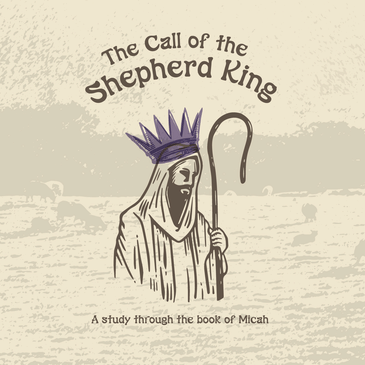
Micah Theme: Throughout his prophecies, we will encounter a figure who is both king and shepherd, who will lead God's remnant flock.
Overview: In this week's sermon, we explore Micah 7, where the prophet stands between a society rife with corruption and a future painted with hope. Micah's messages reveal God's unwavering promise to remain true to His nature, ensuring redemption and justice despite present evils. We examine the compelling concept of the 'remnant', a small, faithful group enduring through generational wickedness, and how this concept applies to us today. Discover the richness of Micah's vision where profound trust in God's promises yields a life of justice, mercy, and humility. Learn what it means to live as part of the remnant, delight in God's unchangeable character, and foster a community that mirrors divine love and righteousness. Join us as we unpack the depths of these prophecies and their implications for our lives, encouraging each of us to embrace the transformative call of the Shepherd-King.
[00:00:00] Thank you for listening to the Calvary Monterey Podcast. Please visit Calvary.com to learn more about our church.
[00:00:12] And visit NateHoldridge.com for additional Bible teaching from our lead pastor, Nate Holdridge.
[00:00:18] Teaching today is our lead pastor, Nate Holdridge.
[00:00:24] All right. Good morning, church.
[00:00:27] Great to see you guys. Let's take out our Bibles today and turn to Micah Chapter 7. Micah Chapter 7.
[00:00:33] We've been studying verse by verse through the book of Micah together.
[00:00:37] And today is our last study of the book of Micah.
[00:00:40] And for that I just want to say congratulations to you because I don't think that there's a...
[00:00:45] I don't think it's a super common thing for a modern Christian to spend a couple of months meditating on the book of Micah.
[00:00:52] So well done. We've done it together going through this beautiful little book.
[00:00:57] And next Sunday, Pastor Manny is going to be sharing the word to encourage and minister to us.
[00:01:03] Give me a brief respite before we jump into a longer study of the book of James.
[00:01:09] And the perspective or the angle that I'm going to be communicating James from is that James is a profile of maturity.
[00:01:18] It's Christian maturity but human maturity. What does God want to produce in our lives?
[00:01:23] We're going to look at that as we move through the book of James together.
[00:01:28] But today we're in Micah Chapter 7, Micah Chapter 7.
[00:01:32] And let's just go to the Lord and pray and ask Him to bless our time in His word as we wrap up our time in this book.
[00:01:39] Lord we thank You for the prophet Micah, the things that You did through him so many years ago.
[00:01:48] Whatever that process was, that still small voice that he heard and received from You,
[00:01:55] that urging and nudging into a really difficult ministry that You gave to him,
[00:02:02] and the fact that he said yes, Lord to You.
[00:02:06] We want to be a people who say yes, Lord to You, to live in the way that You've called us to live.
[00:02:14] And so Lord we thank You, we pray that You'd speak to us from this last chapter in Micah's prophecies this morning.
[00:02:23] In Jesus' name, we pray together. Amen.
[00:02:27] Well the case that I've been trying to build as we've been going through the book of Micah is the case that Micah
[00:02:34] is a man who is both not of this world but is of this world.
[00:02:40] I've been trying to show you that Micah was a man who had one foot in all the chaos and despair and brokenness
[00:02:49] that was among God's people in Israel at the time that he lived, which was about 700 years before Jesus came onto the scene,
[00:02:59] but who had another foot in the glorious future that God promises to establish over and over again all throughout Scripture.
[00:03:11] He both saw clearly the despair and brokenness and atrophy and decay among God's church of that era, the people of Israel.
[00:03:22] But he also saw with hope and clarity this glorious future day that was coming,
[00:03:29] a day where God's mountain would be the epicenter of the whole world and that people would desire longingly to go to God's mountain to hear God's voice.
[00:03:41] Micah saw that future and hope, which is still future to us today, but he saw the reality of God's people in his era.
[00:03:53] But the question that I want to put forth to you today is how could Micah be sure of the future that he envisioned?
[00:04:03] How could he have confidence that what God showed him was coming would actually come to pass?
[00:04:12] How could he be sure that God would one day redeem his people, establish revival conditions on earth and draw all people up to his mountain to hear his law?
[00:04:25] In other words, how could Micah come to the place of saying to himself,
[00:04:30] what I'm seeing is not just a hopeful wish, but a certain reality.
[00:04:37] Because once you get to that point it changes your life.
[00:04:42] But how could Micah get to that place?
[00:04:44] Now to answer that question, I think we need to look at the frame of the whole book of Micah.
[00:04:50] Sometimes when you're moving through Scripture, the Bible will give you clues as to how to understand it by putting frames on certain passages of Scripture.
[00:04:59] And in the book of Micah, the first verse and the first verse of the last phrase provides us with a frame for understanding how Micah came to this determination of hope.
[00:05:13] The first verse, Micah chapter one verse one simply says,
[00:05:17] the word of the Lord that came to Micah.
[00:05:21] This is the only time in the whole book of Micah that Micah's name is mentioned.
[00:05:26] And his name is actually a question.
[00:05:29] We don't pick it up as we read it in English, but the name Micah means who is like Yahweh?
[00:05:36] Who is like the Lord?
[00:05:39] That's the first question of this book.
[00:05:42] What is God like?
[00:05:43] Who is he?
[00:05:44] How is he operating here on earth?
[00:05:48] But the second frame is found at the end of our passage today, chapter seven verse 18, where Micah will conclude all of his oracles with the question,
[00:05:59] who is a God like you?
[00:06:01] Doesn't that sound familiar?
[00:06:02] Micah's name, who is like Yahweh, his concluding question, who is a God like you?
[00:06:08] And Micah is going to answer that question for us today.
[00:06:12] And what he concludes about God is the reason that he is confident in what God is going to do in the future.
[00:06:20] In other words, all the promises that God makes to Micah are sure to Micah because he knows who God is.
[00:06:29] That knowledge of God changes, transforms his life.
[00:06:34] Now, because this is where the book ends,
[00:06:39] I think of this passage that we're going to look at today as Yahweh's voice declaring that he will not defy his very nature.
[00:06:50] All throughout this book, God is pleading with his people and I think by extension pleading with us as his modern day people,
[00:06:58] be who you are.
[00:07:00] If I have redeemed you, if I have called you, if I have chosen you, if the blood of Jesus is upon you,
[00:07:07] if you've placed your faith and trust in me, then be who you are.
[00:07:11] Be the new creature, the new creation that I have reformed you to be.
[00:07:16] But in this concluding chapter, God seems to be saying,
[00:07:21] Regardless of who you are and what you do, I will be who I am.
[00:07:28] As Paul said in 2 Timothy chapter 2,
[00:07:31] When we are faithless, he remains faithful for he cannot deny himself.
[00:07:38] His very nature cannot be violated and so God says,
[00:07:42] I must be, I will be who I am.
[00:07:46] Alright, so in this passage, I think that Micah, because of who he concludes God is,
[00:07:54] he comes to a very specific landing place in his prophecies.
[00:08:00] And I'm going to put that landing place or that conclusion in sentence form.
[00:08:04] Here it is on the screen for you guys.
[00:08:06] I think that the shepherd king who we've been studying all throughout this book, Yahweh himself,
[00:08:11] he says, I will be who I am.
[00:08:14] So choose a remnant life and trust that remnant's future while delighting in that remnant's God.
[00:08:25] Now I'm going to unpack that sentence as we move through Micah chapter 7.
[00:08:29] But first let me give a little definition of that word remnant,
[00:08:33] because I don't need you guys to be pulling out your dictionary right now
[00:08:37] and trying to figure out what in the world is a remnant.
[00:08:40] A remnant, classically, is like a small leftover portion.
[00:08:44] You know if you were to be sowing a garment or something like that
[00:08:49] and you had a patch or piece of material,
[00:08:52] the part that you cut away that you did not need, that would be the remnant.
[00:08:57] That would be the leftover.
[00:08:58] But in biblical terms, it came to be understood as the small seed
[00:09:05] of those remaining faithful people unto the Lord.
[00:09:09] That even if the majority walked away from God,
[00:09:12] there was a remnant, a small group who was faithful unto the Lord.
[00:09:17] So what I think Micah concludes is because who God is,
[00:09:21] I will choose a remnant life.
[00:09:23] I will trust that remnant's future
[00:09:25] and I will delight in the remnant's God.
[00:09:27] So let's look at the first seven verses today
[00:09:30] to think about choosing a remnant life.
[00:09:35] He starts out in verse one.
[00:09:40] If you just follow along with me on the screen or in your Bibles,
[00:09:43] he says,
[00:09:44] Woe is me, for I have become as when the summer fruit has been gathered
[00:09:50] and when the grapes have been gleaned,
[00:09:53] there is no cluster to eat,
[00:09:55] no first ripe fig that my soul desires.
[00:09:59] The godly verse two has perished from the earth
[00:10:03] and there is no one upright among mankind.
[00:10:07] They all lie and wait for blood
[00:10:10] and each hunts the other with a net.
[00:10:13] Their hands are on what is evil to do it well.
[00:10:18] The prince and the judge ask for a bribe
[00:10:21] and the great man utters the evil desire of his soul.
[00:10:25] Thus they weave it together.
[00:10:27] The best of them is like a briar,
[00:10:30] the most upright of them, a thorn hedge.
[00:10:33] The day of your watchmen, of your punishment has come.
[00:10:37] Now their confusion is at hand.
[00:10:40] Verse five, put no trust in a neighbor,
[00:10:42] have no confidence in a friend,
[00:10:44] guard the doors of your mouth from her who lies in your arms.
[00:10:49] For the son treats the father with contempt.
[00:10:51] The daughter rises up against her mother.
[00:10:55] The daughter-in-law against her mother-in-law.
[00:10:57] A man's enemies are the men of his own house.
[00:11:01] But verse seven, as for me, I will look to the Lord.
[00:11:07] I will wait for the God of my salvation.
[00:11:11] My God will hear me.
[00:11:14] All right, very encouraging little paragraph
[00:11:16] that we just read there from Micah.
[00:11:19] And I told you that what I think that Micah has concluded is
[00:11:23] here's who God is and we're going to get to that portion.
[00:11:26] But because God is saying, I will be who I am,
[00:11:30] Micah is saying to us, so choose a remnant life.
[00:11:35] Where do we get that exhortation from in the seven verses
[00:11:38] that I just read?
[00:11:40] Well, I think we have to begin with what Micah said
[00:11:43] that he saw in these seven verses.
[00:11:46] All throughout his oracles from Micah one
[00:11:49] all the way through to Micah chapter seven.
[00:11:51] Micah has decried the idolatry and the covetousness
[00:11:56] that he saw running rampant throughout ancient Israel
[00:12:00] or God's people at that time.
[00:12:02] The rich were especially predatory during the season
[00:12:06] that Micah lived in.
[00:12:08] And their sins from the capital cities of Samaria
[00:12:12] in the north and Jerusalem in the south
[00:12:14] were having a terrible impact upon the populace
[00:12:19] because their decay was tempting foreign nations
[00:12:24] to come attack Israel.
[00:12:26] Oh, they're weakened.
[00:12:27] So let's invade them.
[00:12:29] They're weakened.
[00:12:30] Let's devour them.
[00:12:31] And Micah, he was from a valley that neighboring armies
[00:12:35] would have to pass through in order to get up to Jerusalem.
[00:12:39] So he's got skin in the game.
[00:12:41] He's like, you guys have been blowing it in the past
[00:12:44] and it has affected my neighborhood.
[00:12:46] And so I'm pleading with you and he's decrying
[00:12:50] what he sees happening there among the leadership
[00:12:53] of God's people in Jerusalem.
[00:12:56] But here we are in Micah chapter seven
[00:12:58] where at the end of his prophecies
[00:13:01] and it kind of sounds like no one has listened
[00:13:03] to what he's had to say.
[00:13:05] And that's very possible.
[00:13:07] In fact, it's probable that hardly anyone
[00:13:10] listened to what Micah said.
[00:13:12] There's some evidence that at least one king,
[00:13:14] Hezekiah listened to Micah for a period of time.
[00:13:18] But for the most part, people ignored this man.
[00:13:21] Now he was a contemporary of Isaiah the prophet
[00:13:24] and you might know about when God called Isaiah
[00:13:27] into his long 40 plus years of prophetic ministry.
[00:13:31] After his like miraculous call, he had this vision.
[00:13:35] He sees the Lord high and lifted up in his throne room
[00:13:40] and he says, here I am, Lord send me.
[00:13:42] It's a powerful moment.
[00:13:43] But then Micah asks the question,
[00:13:45] how long do I need to confront Israel
[00:13:48] for their crimes, for their sins?
[00:13:51] And God basically said to him,
[00:13:53] you keep telling them this.
[00:13:56] They will keep rejecting what you say
[00:13:59] until utter destruction comes
[00:14:02] and no one even lives here anymore.
[00:14:04] That was Micah's ministry just like Isaiah's.
[00:14:07] I'm gonna preach the truth until the destruction
[00:14:12] inevitably comes and that's what Micah sees.
[00:14:15] He describes here in these first seven verses
[00:14:18] the decay in its full bloom.
[00:14:22] It has fully taken root and has destroyed everything.
[00:14:27] He said in verse one, he said, it's like,
[00:14:29] when I go into Israel, he said,
[00:14:31] it's like going out to an orchard after gathering
[00:14:34] or a vineyard after gleaning.
[00:14:37] There's no more fruit.
[00:14:39] I'm looking for godly people,
[00:14:41] but I can't find them anymore, he's saying.
[00:14:44] He says as much as my soul desired in verse one and two
[00:14:47] to see some godly people in Israel,
[00:14:50] he says they've all perished from the earth.
[00:14:53] They're just not here anymore.
[00:14:55] He was like looking for someone who loved the Lord
[00:14:58] and he just couldn't find anyone.
[00:15:00] And it wasn't only that no one in Israel,
[00:15:03] at the time was, as we saw last week in Micah 6 verse eight,
[00:15:07] doing justice or loving kindness
[00:15:09] or walking humbly with God.
[00:15:11] It's that selfishness had run rampant.
[00:15:14] There was an utter lack of Christ likeness.
[00:15:18] It had turned them, he said in verse two, into monsters.
[00:15:21] He said they're waiting for blood.
[00:15:24] They're hunting other human beings with nets.
[00:15:28] Micah saw in verse three that their hands were evil
[00:15:32] and that they did their evil really well.
[00:15:34] They were good at it.
[00:15:35] They'd gone pro in doing evil.
[00:15:38] Corruption had reached all the way up to the leadership
[00:15:41] in Israel.
[00:15:42] Micah in verse four kept the agricultural terminology going
[00:15:46] when he said that the best of them,
[00:15:48] the holiest of them, the most righteous of them
[00:15:51] are like a briar or a thorn hedge.
[00:15:54] He's just saying it's spiritually bleak
[00:15:58] among God's people at this time.
[00:16:01] And so he announced to them in verse four
[00:16:04] that the day that watchmen like himself and Isaiah
[00:16:07] had predicted a day of punishment by war-induced confusion,
[00:16:13] it had arrived.
[00:16:15] Defeat in war was the only smelling salt
[00:16:18] that could awaken them from their mission destroying slumber.
[00:16:22] It was the only bucket of ice water
[00:16:24] that could awaken them from their nation-harming drunkenness.
[00:16:28] The only way Micah said,
[00:16:29] you're going to wake up is by losing in war to the Assyrians
[00:16:34] and then the Babylonians.
[00:16:35] Micah said it was so bad
[00:16:38] that regular neighbor and family relationships
[00:16:41] had become dangerous.
[00:16:43] That's what he said in verse six.
[00:16:45] He said friends and parents and children and in-laws,
[00:16:48] all of them became a threat.
[00:16:51] There were no happy Thanksgiving dinners.
[00:16:54] To the point he said in verse six
[00:16:56] that a man's enemies are the men of his own house.
[00:17:01] What do you do when you see something like that?
[00:17:04] What do you do when you see that level of brokenness,
[00:17:07] that level of despair?
[00:17:08] Again, Micah is not seeing this
[00:17:11] among the pagan unbelieving nations,
[00:17:13] though he could have found it there.
[00:17:15] He's seeing this among God's church, among God's people.
[00:17:19] Here's what you do.
[00:17:21] Look at what Micah said in verse seven.
[00:17:23] He said, as for me, I will look to the Lord.
[00:17:27] I will wait for the God of my salvation.
[00:17:30] My God will hear me.
[00:17:33] Doesn't that commitment sound a little bit like Joshua
[00:17:36] at the end of the book of Joshua?
[00:17:38] I love that moment.
[00:17:39] Joshua leads the people into the promised land.
[00:17:42] They vanquish their enemies to a degree.
[00:17:45] They are allotted the land according to God's desires
[00:17:50] and design.
[00:17:51] Even when Joshua gets to the end of his life,
[00:17:53] he's about ready to die.
[00:17:54] It's time for him to pass off leadership
[00:17:56] to the next generation and he urges them.
[00:18:00] Keep your covenant with Yahweh.
[00:18:03] Walk with Yahweh.
[00:18:05] But then it's like he looked in their eyes
[00:18:07] and he saw this might not happen.
[00:18:10] So he said, but as for me and my house,
[00:18:14] we will serve the Lord.
[00:18:16] He was making that personal commitment to God.
[00:18:19] And when Micah said this at Queen Joshua,
[00:18:23] Micah represented everyone in his day and in our day
[00:18:27] who decides to choose what I'm calling a remnant life.
[00:18:33] Micah would have agreed with Jesus.
[00:18:35] He would have said,
[00:18:36] I want to enter by the narrow gate that leads to life
[00:18:39] rather than go through the broad way that leads to destruction.
[00:18:45] Micah wanted to be a part of God's remnant people,
[00:18:48] a remnant that he referred to a lot all throughout his oracles.
[00:18:54] Now righteous remnants, they're remnants for a reason.
[00:18:58] They're never big.
[00:19:00] They're always small.
[00:19:02] But Micah would rather stand with the small remnant
[00:19:05] that go along with the spiritual decay
[00:19:08] that he saw among God's people.
[00:19:12] There's a story in the Old Testament
[00:19:14] that really pictures this remnant concept really well.
[00:19:18] It comes from the life of Elijah in the book of First Kings.
[00:19:23] Elijah was sort of that quintessential or first of the prophets.
[00:19:28] And he lived in hiding for a period of time
[00:19:32] because he rebuked King Ahab, the king of Israel at the time
[00:19:36] for introducing along with his wife, Jezebel
[00:19:39] the worship of the false God, Baal, all throughout the land.
[00:19:44] Ahab wanted him dead. Jezebel wanted him dead.
[00:19:47] So he lived in hiding for a time until God told him to come out of hiding
[00:19:51] and challenge the prophets of Baal to a worship contest.
[00:19:56] It's one of the classic stories of the Old Testament.
[00:19:59] They get all get together and the 450 prophets of Baal,
[00:20:04] Elijah says you guys can go first.
[00:20:07] And so they set up their altar, they set up their sacrifice.
[00:20:10] Keep in mind that their God Baal was supposed to be the God of the weather,
[00:20:13] the God of thunder, the God of lightning.
[00:20:16] And so it should have been no problem for them to cry out to their God
[00:20:19] and have their God consume the sacrifice on the altar.
[00:20:23] And they're dancing around, they're cutting themselves,
[00:20:26] they're crying out to their God for hours.
[00:20:29] And there's of course the classic things that Micah does
[00:20:32] in making fun of them, you know, is your God on vacation?
[00:20:36] Is your God on a distant journey?
[00:20:38] Is your God going to the bathroom right now?
[00:20:40] Maybe he's relieving himself and this is embarrassing for him, you know.
[00:20:44] And eventually they fail and Micah at the time of Yahweh's prescribed evening sacrifice
[00:20:51] sets up a humble, simple altar, stones from the earth,
[00:20:55] wood on the altar, the sacrifice on top of it.
[00:20:59] Then he digs a trench around it and asks them to pour barrels
[00:21:03] and barrels of water on top of the sacrifice
[00:21:06] until the trench around the sacrifice is filled with water.
[00:21:11] And then at the time of the evening sacrifice, he just prays a simple humble prayer
[00:21:15] and the fire of God falls down and consumes the sacrifice,
[00:21:19] the wood, the stones and the water in the trench around the sacrifice.
[00:21:25] And in Elijah, in that moment of victory,
[00:21:29] I mean, talk about like the ultimate high, the ultimate mic drop, you know.
[00:21:34] He just says, will you serve Yahweh or will you serve Baal?
[00:21:42] And immediately as he says this word gets back to Jezebel
[00:21:47] and she begins to desire his death even more fervently.
[00:21:52] And this puts fear and panic in the mighty prophet's heart
[00:21:55] and he goes up into the mountains to be alone with God
[00:21:59] and he says to God, it was a pity party kind of prayer to God.
[00:22:02] He says, God, everybody has denied you
[00:22:06] and I alone am left.
[00:22:09] Like you just don't say that to God.
[00:22:11] But that's what he said.
[00:22:12] I'm the only faithful one.
[00:22:14] Everyone in Israel has bowed the knee to Baal.
[00:22:18] I want out Lord.
[00:22:20] I want to retire because this is too tiresome.
[00:22:25] The Lord said and corrected Elijah and said,
[00:22:29] I reserve 7000 in Israel.
[00:22:33] All whose knees have not bowed down to Baal
[00:22:36] and whose mouths have not kissed him.
[00:22:39] In other words, even in the darkest of spiritual moments,
[00:22:43] God has his remnant that he is reserving for himself.
[00:22:49] We want to be that, don't we?
[00:22:51] We want to be those faithful people
[00:22:53] that even in dark spiritual times,
[00:22:55] we say, Lord, I want to walk with you.
[00:22:57] I want to be different.
[00:23:01] But the reality is that this remnant decision
[00:23:04] is a decision that we must make throughout our lives.
[00:23:09] If you're uncomfortable being in the minority,
[00:23:12] even in the minority within the visible church,
[00:23:16] it'll be hard for you to embrace this remnant life.
[00:23:19] It will be difficult for you to decide,
[00:23:22] along with Micah, to look to the Lord
[00:23:24] and wait for the God of your salvation.
[00:23:27] So that's the first encouragement that Micah gives
[00:23:30] that we need to embrace this remnant life.
[00:23:33] I was trying to think through like,
[00:23:34] how can I illustrate this for you guys?
[00:23:36] And a memory came to me from early on in my life.
[00:23:41] My parents are from Southern California
[00:23:43] and they moved up here in 1978 to start this church.
[00:23:48] And because they were from Southern California
[00:23:51] and because my dad was a big baseball guy,
[00:23:55] he raised me to root for the Los Angeles Dodgers.
[00:23:58] And I thought it was like the most normal thing
[00:24:01] in the world until I went to Forest Grove Elementary School
[00:24:06] and started getting to know other local kids.
[00:24:09] And I started realizing like, you know,
[00:24:11] I'm asking like, who do you root for?
[00:24:13] Well, the San Francisco Giants.
[00:24:14] Who do you root for?
[00:24:15] The San Francisco Giants.
[00:24:16] Who do you root for?
[00:24:17] The San Francisco Giants.
[00:24:18] Who do you hate the most of anyone on earth?
[00:24:21] The Los Angeles Dodgers.
[00:24:23] And I started realizing like, oh man,
[00:24:25] I'm the odd man out here.
[00:24:26] And then I remember he would take me to baseball games
[00:24:29] up at what was then Candlestick Park
[00:24:32] where the Giants played.
[00:24:34] And we would sit in the bleachers
[00:24:36] and it was a little bit scary, you know.
[00:24:39] It's not as scary in the bleachers now
[00:24:41] at their current part because it's hard to be intimidated
[00:24:43] by people with like a glass of wine
[00:24:45] and garlic fries in their hands or whatever.
[00:24:48] But back in the day, it was a little scarier.
[00:24:51] I mean, hey, I put the bleacher creatures in LA
[00:24:54] up against the San Francisco people any day of the week.
[00:24:56] I mean, I've seen Giants fans in the bleachers in LA.
[00:25:01] That's bravery to do that.
[00:25:04] But I remember going to these games
[00:25:07] and just feeling like, man, this is,
[00:25:09] I'm part of a small little group.
[00:25:14] Now all throughout the stadium,
[00:25:15] there were probably thousands of us
[00:25:17] rooting for that team, rooting for the Dodgers.
[00:25:20] But in our experience individually, we fell very alone.
[00:25:25] And you've got to make that choice.
[00:25:28] You've got to say, I am willing to be different.
[00:25:31] Listen, there are some of you here.
[00:25:34] I know you're still making a decision on whether or not
[00:25:38] you're actually going to follow Jesus.
[00:25:41] You might believe in the gospel.
[00:25:43] You might even confess him as the savior of your life,
[00:25:48] but he wants so much more than that.
[00:25:51] He wants to be the Lord of your life.
[00:25:53] But if you're going to embrace that kind of vision
[00:25:56] for yourself, you're going to have to enter
[00:25:59] into saying, I am willing to be part of a small,
[00:26:03] remnant of people here on earth.
[00:26:06] So that's the first thing I want you to see.
[00:26:08] I am who I am, God says, so choose the remnant life.
[00:26:11] The second thing is, and trust that remnant's future.
[00:26:16] Trust that remnant's future.
[00:26:18] Let's read verse eight through 13 together.
[00:26:24] Actually, past verse 13.
[00:26:26] Rejoice not over me, oh my enemy, when I fall.
[00:26:31] I shall rise when I sit in darkness.
[00:26:33] The Lord will be a light to me.
[00:26:35] I will bear the indignation of the Lord
[00:26:38] because I have sinned against him until he pleads my cause
[00:26:41] and executes judgment for me.
[00:26:43] He will bring me out to the light.
[00:26:45] I shall look upon his vindication.
[00:26:47] Then my enemy will see, and shame will cover her
[00:26:50] who said to me, where is the Lord your God?
[00:26:53] My eyes will look upon her.
[00:26:55] Now she will be trampled down like the mire
[00:26:59] of the streets.
[00:27:00] A day verse 11, for the building of your walls,
[00:27:03] in that day the boundary shall be far extended.
[00:27:06] In that day they will come to you from Assyria
[00:27:09] and from the cities of Egypt and from Egypt to the river
[00:27:12] from the sea to sea and from mountain to mountain.
[00:27:16] But the earth will be desolate because of its inhabitants
[00:27:19] for the fruit of their deeds.
[00:27:22] Verse 14, shepherd your people with your staff,
[00:27:26] the flock of your inheritance who dwell alone in a forest
[00:27:29] in the midst of a garden land.
[00:27:31] Let them graze and bishon and gilead as in the days of old
[00:27:35] as in the days when you came out of the land of Egypt,
[00:27:38] I will show them marvelous things.
[00:27:40] The nations shall see and be ashamed of all their might.
[00:27:44] They shall lay their hands on their mouths,
[00:27:47] their ears shall be deaf.
[00:27:49] They shall lick the dust like a serpent,
[00:27:52] like the crawling things of the earth.
[00:27:54] They shall come trembling out of their strongholds.
[00:27:58] They shall turn in dread to the Lord our God
[00:28:01] and they shall be in fear of you.
[00:28:05] Okay, so what I'm saying here in this second movement
[00:28:09] is that the Lord is saying, I will be who I am
[00:28:12] so choose a remnant life and trust that remnant's future.
[00:28:18] Where do we get that from in this passage?
[00:28:21] I think what we have to do is we have to enter into
[00:28:24] what Micah envisioned here in this passage.
[00:28:27] This passage that I just read to you,
[00:28:29] it's like a prayer that Micah prays
[00:28:32] combined with a dream that Micah sees.
[00:28:35] Micah is the one speaking throughout the whole thing
[00:28:39] and his words are both a cry to Yahweh
[00:28:43] but then also he's rebuking or prophesying
[00:28:47] to the nations that had eventually invaded Israel
[00:28:52] and defeated them.
[00:28:54] And as Micah gazed into the future,
[00:28:58] it seems that what he saw was a leveling of everything
[00:29:02] that is anti-Yahweh, anti-God
[00:29:05] and the exaltation also simultaneously
[00:29:10] of Yahweh's remnant.
[00:29:12] In a sense, this is like Holy Spirit inspired
[00:29:17] prophetic trash talk from Micah.
[00:29:20] He's saying this is what the very people that God used
[00:29:25] to discipline Israel, the Babylonians, the Assyrians,
[00:29:29] the Egyptians, this is what those people
[00:29:32] are going to endure in the future
[00:29:34] when God raises up his remnant
[00:29:37] and defeats the enemies of his people.
[00:29:41] What particularly did Micah see?
[00:29:44] Well, in verse eight it says that he saw a day coming
[00:29:47] when those in darkness were brought into the light
[00:29:50] even though the enemy would cause the fall of God's people
[00:29:53] God would one day resurrect and rise up his people,
[00:29:57] raise them up into God's kingdom.
[00:29:59] He saw in verse nine and ten
[00:30:01] that God's people would bear their discipline.
[00:30:03] They would, they would go into captivity
[00:30:05] but then they would be cleansed, he says
[00:30:08] and be vindicated by God
[00:30:10] as he puts down the very enemies that had defeated them.
[00:30:13] In verse 11 through 13 he saw a day
[00:30:17] when peace would be so supreme
[00:30:20] that God's people would expand their boundary peacefully.
[00:30:24] There'd be no pushback
[00:30:26] and they'd become the worship center
[00:30:28] of all the nations of the world
[00:30:30] which I think is a fulfillment of God's promise
[00:30:33] to Abraham way back in Genesis chapter 12
[00:30:36] that through him and his ancestry
[00:30:39] or his descendants all the nations of the earth
[00:30:42] would be blessed.
[00:30:44] And then he in verse 14 and 15
[00:30:47] saw the shepherd king figure arise
[00:30:50] to lead his people into fruitfulness.
[00:30:53] Right now in our modern time
[00:30:56] in invisible Jesus we can't see him
[00:30:59] is leading his people in covert
[00:31:02] and subversive ways
[00:31:04] but on that day, the day that Micah saw
[00:31:07] King Jesus would be visible
[00:31:09] and lead his people in overt and obvious ways.
[00:31:14] And then in verse 16 and 17 Micah saw
[00:31:16] a spirit of repentance would overcome
[00:31:19] even the enemies of God to the point
[00:31:21] that people would crawl to God's house
[00:31:24] if they had to.
[00:31:27] Now all of this should sound familiar to you
[00:31:29] if you've been coming to church
[00:31:31] as we've been going through the book of Micah
[00:31:33] because when we were in Micah chapter 4
[00:31:35] Micah had this kind of vision.
[00:31:37] He saw a day when God would rise up
[00:31:41] there in Jerusalem and all the nations
[00:31:43] of the world would flow to God
[00:31:45] as the center of all things.
[00:31:47] And as I said when we were there
[00:31:49] in Micah chapter 4, Micah is not the only one
[00:31:51] to have that prediction.
[00:31:53] Isaiah gives a replicate or duplicate
[00:31:56] description of that very same thing
[00:31:58] in Isaiah chapter 2.
[00:31:59] It's as if God is saying on repeat
[00:32:03] this is what I am going to do in the future.
[00:32:06] Do you believe it?
[00:32:09] And because Micah believed it,
[00:32:11] it changed his life.
[00:32:13] Listen, what we think about
[00:32:16] what is going to happen,
[00:32:18] it has a major impact on our behavior today.
[00:32:23] I was envisioning or thinking of a way
[00:32:25] to try to illustrate this
[00:32:27] and I was thinking of a young teenage boy
[00:32:30] who has not spent even a minute
[00:32:33] in the weight room in his entire life.
[00:32:36] And he's getting ready to try out
[00:32:39] for a sport or something like that
[00:32:41] and the coach says, hey, you know,
[00:32:43] it really helped you to add some muscle
[00:32:45] to this skeleton that I see in front of me.
[00:32:48] And so what you need to do is hook up
[00:32:51] with our trainer and you need to go
[00:32:53] to the gym because if you do
[00:32:55] and if you follow the plan
[00:32:58] that this trainer lays out for you,
[00:33:00] here's what will happen
[00:33:02] and kind of giving them a vision
[00:33:05] for what will occur.
[00:33:07] How will that young man return
[00:33:10] to the gym day after day?
[00:33:13] Well, he'll only go if he believes
[00:33:16] that by behaving in this way
[00:33:18] there is an outcome
[00:33:20] that is going to happen in my life.
[00:33:23] He might even struggle to go
[00:33:25] if he believes that vision
[00:33:27] but he definitely will not go
[00:33:29] if he doesn't believe that vision.
[00:33:32] Micah here believes in the vision
[00:33:35] that he has seen
[00:33:37] and I think the question is,
[00:33:39] do we believe?
[00:33:41] Now Hebrews tells us in Hebrews 11 verse 1
[00:33:44] that faith is the assurance
[00:33:46] of things hoped for.
[00:33:48] A conviction about unseen realities.
[00:33:52] Micah is showing us
[00:33:54] an unseen future reality
[00:33:58] that we should have faith in,
[00:34:00] believe in and trust in.
[00:34:05] This future is what will happen
[00:34:08] to God's remnant.
[00:34:11] Now because Micah believed this
[00:34:14] about the remnant,
[00:34:15] it's why he had such incredible hope.
[00:34:18] It's like Micah saw the remnant
[00:34:20] of God's people and he talked about them
[00:34:22] in chapter 2 and 4 and 5
[00:34:24] and now here in chapter 7.
[00:34:26] Because Micah thought this
[00:34:28] about the remnant,
[00:34:29] it's like he saw the remnant
[00:34:31] of God's people like a small seed
[00:34:33] that would break up the earth
[00:34:35] to become a full-grown tree.
[00:34:38] In other words, for Micah,
[00:34:40] physical force was not going to produce
[00:34:42] the kingdom of God,
[00:34:43] but a ruler from Bethlehem
[00:34:45] would come to bring a deliverance
[00:34:47] to his people.
[00:34:48] And I want you to think about
[00:34:50] being part of God's remnant in that way.
[00:34:52] It doesn't just mean smallness,
[00:34:54] it means a slow, long process
[00:34:58] where God is going to produce
[00:35:00] his ultimate work.
[00:35:02] One scholar said it like this,
[00:35:04] the remnant is a force in the world.
[00:35:07] Not simply a residue of people
[00:35:10] or a small group of people
[00:35:12] as the word remnant may seem to imply.
[00:35:14] In the Bible, it's a force
[00:35:16] that will ultimately conquer
[00:35:18] or overcome the world.
[00:35:21] I think that this is part of the reason
[00:35:23] why Jesus loved seed imagery
[00:35:25] so much in his parables.
[00:35:28] He often told parables about
[00:35:30] the power of a seed.
[00:35:32] Small and slow,
[00:35:34] a seed can grow
[00:35:37] into a mighty forest
[00:35:39] in the right conditions.
[00:35:40] And Micah sees this seed-like remnant
[00:35:43] by the resurrection power
[00:35:44] and eventual presence of Christ
[00:35:46] blossoming into a forest of righteousness.
[00:35:50] Remember when Jesus answered
[00:35:52] his disciples' question
[00:35:53] when they said,
[00:35:54] teach us how to pray?
[00:35:55] I just think that they were watching
[00:35:57] Jesus' prayer life
[00:35:58] and they're like,
[00:35:59] we thought we knew how to pray,
[00:36:00] but now we're watching him
[00:36:01] and we realize we have no idea
[00:36:03] how to pray.
[00:36:04] And so they said,
[00:36:05] teach us to pray.
[00:36:06] And one of the things that Jesus said
[00:36:08] in his model template prayer
[00:36:10] for us is pray your kingdom come,
[00:36:13] your will be done on earth
[00:36:16] as it is in heaven.
[00:36:18] I think in a sense
[00:36:19] what Micah is saying to us here
[00:36:21] is that we need to believe
[00:36:24] that Jesus' prayer will come to pass,
[00:36:28] that those prayers are like seeds
[00:36:30] that have gone into the ground
[00:36:32] and will grow into a strong tree
[00:36:35] of God's kingdom,
[00:36:37] God's will being done on earth
[00:36:40] as it is in heaven when the time comes.
[00:36:43] So here's my question.
[00:36:44] Can you choose the remnant life
[00:36:47] while trusting God's plan
[00:36:49] for his remnant future?
[00:36:51] Can you do that?
[00:36:52] Or do you need to have it all
[00:36:55] right now?
[00:36:57] When Christians get into that mentality
[00:36:59] we've got to have all of it now.
[00:37:01] We've got to have the power now.
[00:37:02] We've got to have the stuff now.
[00:37:04] We've got to have it all now.
[00:37:05] We really get weird.
[00:37:07] But James, he gives us a template to follow.
[00:37:11] He said be patient there for brothers
[00:37:14] until the coming of the Lord.
[00:37:16] See how the farmer waits
[00:37:18] for the precious fruit of the earth,
[00:37:20] being patient about it
[00:37:21] until it receives the early and the late rains.
[00:37:25] You also be patient.
[00:37:26] Establish your hearts
[00:37:28] for the coming of the Lord as at hand.
[00:37:31] A farmer puts the seed into the ground
[00:37:34] and does not expect fruit the next day.
[00:37:38] We put our kingdom come,
[00:37:39] your will be done prayers into heaven
[00:37:42] and we do not expect
[00:37:44] the full bloom of that the next day.
[00:37:46] We're willing to wait
[00:37:48] and that's what Micah embraced
[00:37:50] and I think we should embrace as well.
[00:37:53] Okay, in our last little movement
[00:37:55] three short verses
[00:37:57] I think we should say it like this.
[00:37:58] We also then need to delight
[00:38:00] in the remnant's God.
[00:38:01] He says in verse 18
[00:38:02] who is a God like you?
[00:38:04] Pardoning, iniquity
[00:38:06] and passing over transgression
[00:38:08] for the remnant of his inheritance does.
[00:38:11] He does not retain his anger forever
[00:38:13] because he delights instead fast love.
[00:38:15] He will again have compassion on us.
[00:38:17] He will tread our iniquities under foot.
[00:38:19] You will cast all our sins
[00:38:21] into the depths of the sea.
[00:38:23] You will show faithfulness to Jacob
[00:38:26] and steadfast love to Abraham
[00:38:29] as you have sworn to our fathers
[00:38:31] from the days of old.
[00:38:38] Okay, I've said to you
[00:38:40] this is Yahweh saying
[00:38:41] I will be who I am
[00:38:42] so choose a remnant life
[00:38:43] trust that remnant's future
[00:38:45] and this last thing
[00:38:46] well delighting in the remnant's God.
[00:38:48] Where do I get that from?
[00:38:49] Well like I said already
[00:38:51] this is where Micah ends his oracles
[00:38:52] with the question
[00:38:53] who is a God like ours?
[00:38:58] Micah chose this remnant life
[00:38:59] trusted in the remnant future
[00:39:01] but he only did that
[00:39:03] because he delighted in the God
[00:39:05] of that remnant.
[00:39:07] It seems to me that what's happening here
[00:39:09] is that Micah, he's like
[00:39:11] studying his own oracles.
[00:39:14] He's like these people are terrible
[00:39:18] you know and he's getting all these visions
[00:39:20] from God that decry the wretchedness
[00:39:24] that he's seeing in Israel at that time
[00:39:27] but then he's also seeing that God is going to take
[00:39:29] a remnant of those wretched people
[00:39:32] and do this glorious, beautiful
[00:39:35] work in the future
[00:39:37] and he's kind of asking the question
[00:39:39] how could Yahweh
[00:39:41] take a people so full
[00:39:43] for so long of spiritual adultery
[00:39:45] and community brutality
[00:39:47] discipline them with as much severity
[00:39:50] as he and they could handle
[00:39:53] and remake them into the glorious epicenter
[00:39:57] of his forever kingdom some day.
[00:40:01] That's what Micah is asking
[00:40:03] what kind of God does that?
[00:40:06] Who is this God?
[00:40:09] And as Micah is like studying
[00:40:11] his own oracles thinking about
[00:40:14] how and who is this God
[00:40:17] he starts thinking I think
[00:40:19] of one of the classic episodes
[00:40:22] in the book of Exodus.
[00:40:24] He thinks about this time where the people of Israel
[00:40:26] were confronted by God after they've been delivered
[00:40:28] from their captivity in Egypt
[00:40:30] there at Mount Sinai and God invites them
[00:40:33] to be his people and they say
[00:40:35] yes we want to be your people
[00:40:37] we're all in whatever you say we will do
[00:40:39] he gives them the ten commandments
[00:40:40] we love it, we're in
[00:40:42] he gives them the law, they say
[00:40:43] we love it, we're in
[00:40:45] he gives them the sacrificial system
[00:40:47] and they say we love it, we're in
[00:40:49] and then Moses goes up to the mountain
[00:40:51] to worship God a little bit more
[00:40:53] and get the ten commandments written on stones
[00:40:56] so that they can have a copy for themselves
[00:40:59] and while they're doing that
[00:41:01] they make a golden calf in the valley below
[00:41:03] and begin worshiping it and saying
[00:41:05] this is the God who delivered us
[00:41:07] from our slavery in Egypt
[00:41:09] and how does God respond?
[00:41:11] God calls Moses up to the mountain
[00:41:13] after a moment of Moses interceding for them
[00:41:16] and God announces to Moses
[00:41:19] this is who I am
[00:41:21] I am a God gracious and merciful
[00:41:23] and slow to anger and abounding and loving kindness
[00:41:25] I am doing these things
[00:41:27] I am these things for a
[00:41:29] bail, worshiping, golden calf
[00:41:32] worshiping people
[00:41:34] that's who God is like
[00:41:35] like I said he pardons iniquity
[00:41:37] he passes over transgression for the remnant
[00:41:39] he does not retain his anger forever
[00:41:41] he delights instead fast love
[00:41:43] it's his only conclusion
[00:41:45] in verse 19 his compassion
[00:41:47] drives him to tread our iniquities under foot
[00:41:49] and cast them into the depths
[00:41:51] of the sea like he cast
[00:41:53] the Egyptian chariots
[00:41:55] so many centuries earlier
[00:41:57] and he will demonstrate faithfulness
[00:41:59] and covenant love to the physical
[00:42:01] and spiritual descendants of Abraham
[00:42:03] Isaac and Jacob that's who God is
[00:42:06] I think in a sense you could say
[00:42:08] that the God who
[00:42:10] as we saw last week in Micah 6
[00:42:12] 8 invites us to be a people who
[00:42:15] do justice
[00:42:17] love kindness
[00:42:19] and walk humbly with him
[00:42:22] you could say that God did all those things before
[00:42:25] we did
[00:42:27] he does justice and that he does not merely
[00:42:29] overlook sin and pretend it doesn't exist
[00:42:32] but consumes the judgment within himself
[00:42:35] the shepherd king substituted himself
[00:42:38] for us on the cross he loves kindness
[00:42:41] and that he delights Micah says instead
[00:42:44] fast love he's loyal in other words
[00:42:46] to all those who have turned to and trusted him
[00:42:49] and he walks humbly with us
[00:42:52] so humbly with us that he shares
[00:42:54] in our weaknesses the New Testament telling us
[00:42:57] that the son of God emptied himself
[00:43:00] to become as we are
[00:43:02] who Micah would ask is a God like that
[00:43:06] there is no God who compares
[00:43:08] only our God is like that
[00:43:10] we are our most privileged people
[00:43:12] as the psalmist says
[00:43:14] blessed are the people whose God is the Lord
[00:43:18] I want to wrap up our whole time in Micah
[00:43:20] with a brief story for you guys
[00:43:22] you guys know that each summer
[00:43:24] I like to take my family up to Lake Tahoe
[00:43:26] for a couple of weeks of just like rest
[00:43:28] and being in the sun and all of that
[00:43:30] and you also know that one of my favorite places
[00:43:33] on earth is Costco
[00:43:35] and someone even gave me for Christmas
[00:43:38] Kirkland signature hats
[00:43:42] plural because you can't buy one it's a two pack
[00:43:45] and so that means anything I need to buy
[00:43:51] for Tahoe, for beach or whatever
[00:43:53] I get it at Costco because the return policy
[00:43:56] is out of this world if it breaks
[00:43:58] I just bring it right back
[00:44:00] so I've got a couple of stand up paddle boards
[00:44:02] inflatable stand up paddle boards
[00:44:04] that we got at Costco
[00:44:06] and I've got some chairs that we got at Costco
[00:44:08] I think even an umbrella that we got at Costco
[00:44:10] and there was this one little moment this last year
[00:44:12] where we were leaving the beach
[00:44:14] and we kind of have like our Holdridge family system
[00:44:17] you guys are on the paddle boards
[00:44:19] you guys are on the blankets
[00:44:21] and the beach bag, dad's on the cooler
[00:44:23] and just all this stuff
[00:44:25] and we're like trekking out
[00:44:27] and this young guy sees us
[00:44:30] and he comes running up
[00:44:32] and I think he threw out a bro
[00:44:34] and I kind of turn and like pay attention
[00:44:39] and he's like that's our stuff
[00:44:42] you're stealing our stuff
[00:44:44] I'm just like yeah my little family of five
[00:44:47] we concocted this incredible plan
[00:44:50] to come steal your stuff here in Lake Tahoe
[00:44:53] and I'm like hey we shop at Costco
[00:44:57] just like you okay
[00:44:59] go look at the beach
[00:45:01] there's a lot of these around there
[00:45:03] this is our stuff
[00:45:05] but you know he was trying to be like a little threatening
[00:45:08] or whatever and I wasn't worried about it alright
[00:45:11] I had this guy like no problem
[00:45:16] but he was like closer to my daughters
[00:45:18] and my wife than he was to me
[00:45:20] and I'm just like kind of like thinking
[00:45:22] like how quick am I going to have to be
[00:45:26] to get up on this guy
[00:45:27] I don't know what I was thinking
[00:45:28] like he's going to jump Christina or something
[00:45:30] but that's what I like had in my head
[00:45:33] I'm like immediately I'm just like
[00:45:35] I'm ready to throw down with this dude
[00:45:38] and he ended up walking away
[00:45:40] and we're like loading up the car
[00:45:42] and then you know as we're pulling out
[00:45:44] I see him running back down to the beach
[00:45:46] with some really big dudes
[00:45:48] so I'm glad that we got out of there
[00:45:50] before that moment
[00:45:52] okay that instinct in me
[00:45:55] that instinct to just like
[00:45:57] of course I'll protect my bride
[00:45:59] of course I'd protect my family
[00:46:01] that instinct
[00:46:04] this is where we want to get to
[00:46:06] in our walk with God
[00:46:09] Micah because he meditated on who God is
[00:46:14] because he had a relationship with God
[00:46:17] the whole Micah 6-8 thing
[00:46:19] do justice, love, kindness, walk humbly with God
[00:46:21] it was second nature
[00:46:23] he didn't have to think long and hard
[00:46:27] about doing those things
[00:46:31] it had become who he was
[00:46:34] because of his attachment
[00:46:37] or his connection to Yahweh
[00:46:41] and this is where the Lord wants to take our lives
[00:46:44] he wants to get us into the Micah sphere
[00:46:47] he wants us to be these types of people
[00:46:51] but it will not happen
[00:46:53] if all we're doing
[00:46:55] is just trying to think through how to get there
[00:46:59] it'll happen more and more
[00:47:01] as we think about who God is
[00:47:03] and spend time and relationship with him
[00:47:06] he then transforms us to become
[00:47:09] more like himself
[00:47:11] to where it becomes second nature to us
[00:47:14] rather than something we have to think through
[00:47:17] every single moment
[00:47:19] Thank you for listening
[00:47:21] If you would like more teachings and information about Calvary Monterey
[00:47:25] please visit Calvary.com
[00:47:27] You can also find books, teachings through the Bible
[00:47:30] and articles from our lead pastor at NateHoldrich.com
[00:47:34] Thanks again for tuning in
[00:47:36] See you next week